- Floors
- LVP, engineered hardwood, laminate
- Methods
- Floating or glue-down
- Goes over
- Concrete slab
- Estimate
- Free
Why not solid hardwood downstairs
Concrete slabs pass moisture upward, and a basement is the dampest level of a house. Solid hardwood swells and cups when it takes on moisture, which is why it is not recommended below ground level. The floors below are built for it.
Your options
- Luxury vinyl plank (LVP). Waterproof planks with a wood look. We install it floating, where the planks click together over the slab, or glued down.
- Engineered hardwood, glued down. A real wood surface on a layered core that stays stable over concrete. This is how you get actual wood in a basement.
- Laminate. A hard-wearing floating floor at a lower price. It suits basements that stay dry.
The slab comes first
Any of these floors is only as good as the concrete under it. The slab has to be dry and flat. High spots get ground down, low spots get filled, and a floor that shows signs of moisture gets dealt with before anything goes over it.
Not only for basements
The same floors work on any concrete slab and in rooms where water is a risk, such as laundry rooms and rental units. If you want one look across a whole level, we can help you choose a floor that works in every room on it.
Other services: Hardwood installation · Sanding and refinishing · Stairs and railings · Repairs
From bare wood to finished
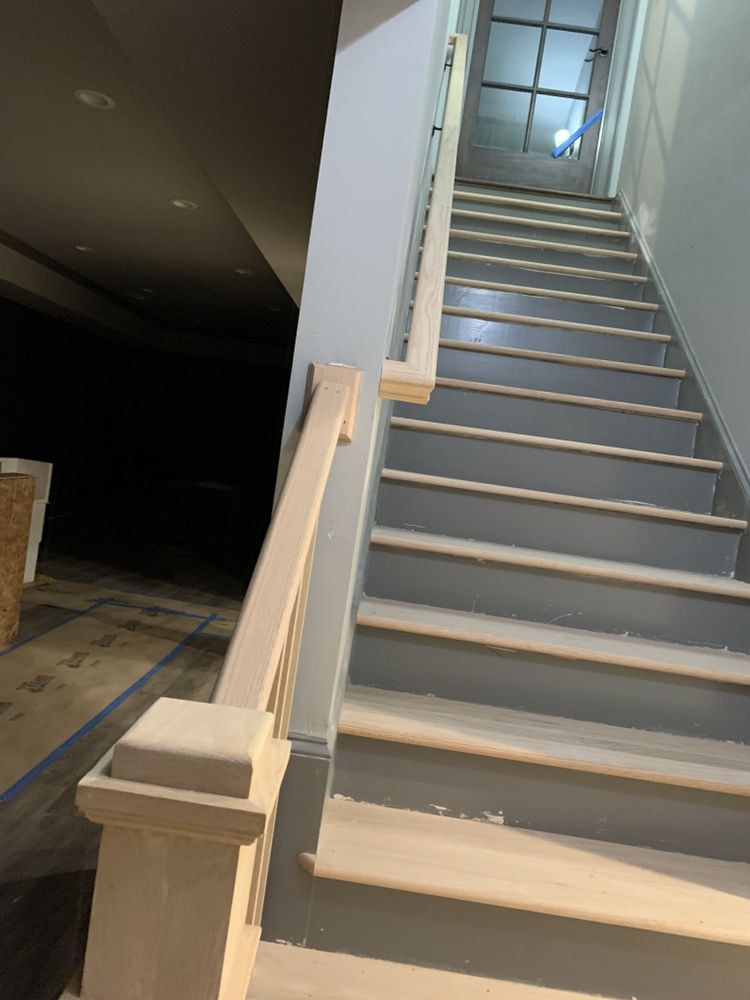
Plank floors and basement work
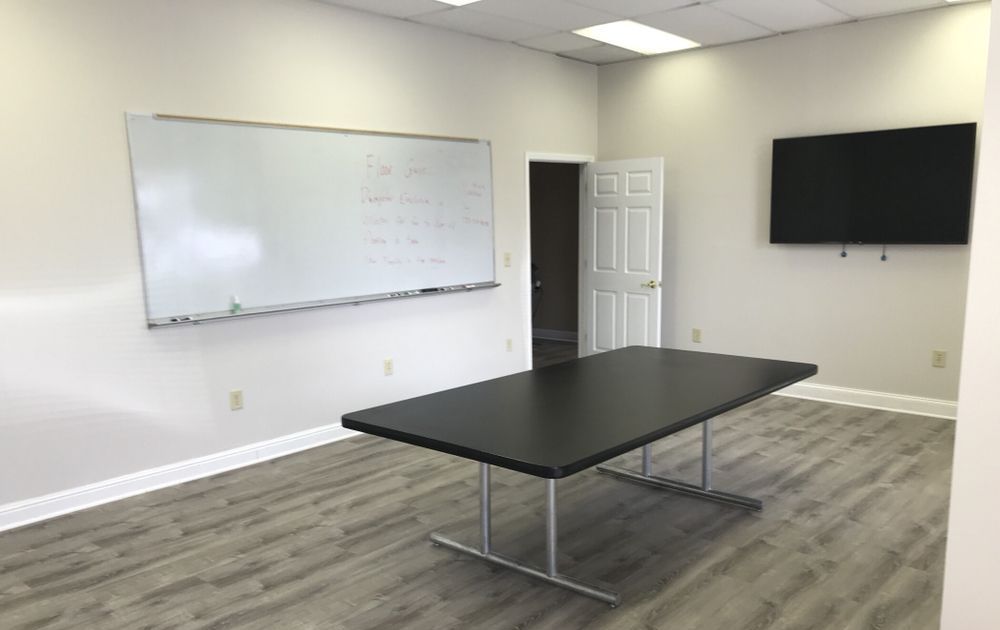
New gray plank flooring
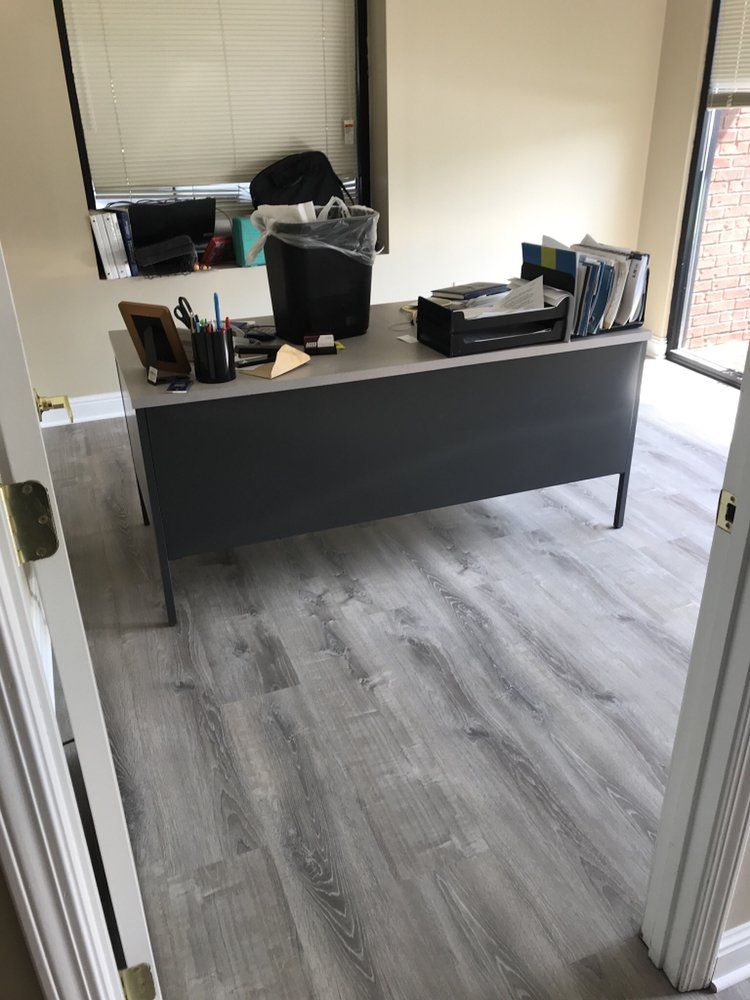
Gray plank flooring
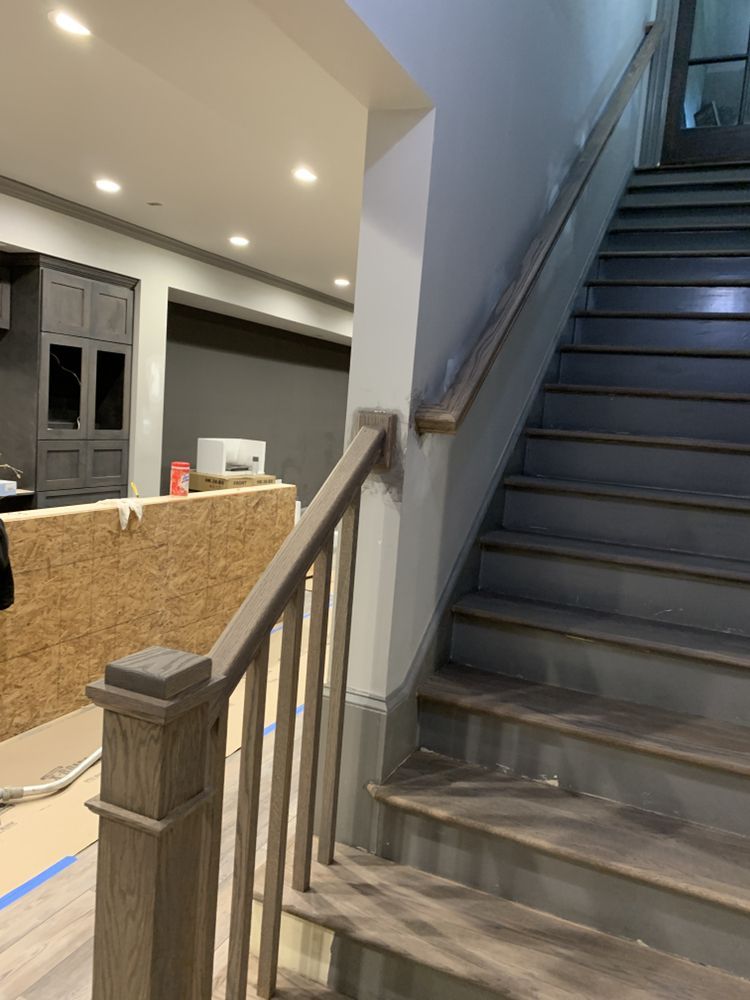
Stained gray
Call (678) 851-9375
Tell us which rooms, the rough square footage, and what the floor looks like now. We will set a time to come out, measure, and price the job.